Do you have a tree that needs to be removed in Gwinnett County? e other words, whether you’ve got a gangly sweetgum with those awkward spiky gumballs and what seems like a league of squirrels taking shots at your house or an oak tree teetering toward your roof after some heavy storms just passed through or an Eastern Red Cedar that’s dead as Elvis and more dangerous than well, who cares – all doom-and-gloom tales aside: knowing exactly how much it costs to remove trees in Gwinnett County might keep you from becoming one of them.
The thing is: Tree removal isn’t like anything else. That quote your neighbor got to take down their pine tree in their backyard? It may not be quite the same as what you will get paid for that massive black walnut tree hanging over your power lines. Prices vary for a number of reasons that we will get into, and to know what’s driving prices up (or down) will help you budget wisely and be able to spot a good deal from miles away.
The reasons most people around here need trees removed are actually pretty straightforward:
- Safety hazards – died branches, diseased trees, or too close to the house
- Property improvements – clearing out that space for the deck you’ve been meaning to build or tidying up the yard
- Storm damage — for those times when Georgia weather can turn, volatile, especially with our humid summers and wet winters
This guide to removing trees reveals the obvious — and not-so-obvious — costs of tree removal, from stump grinding to accessibility factors that can affect the cost of getting rid of a troublesome tree. Let’s dive into it.
Overview of Tree Removal Costs in Gwinnett County
Let’s talk numbers. A Gwinnett homeowner’s average tree removal cost will usually range from $200 to $2,000. Yeah, that’s quite a spread — sort of akin to the gap between ordering a pizza and catering a wedding reception.
It all boils down to one simple fact about whatever tree cutting services charge in that price range: it isn’t random. A small dogwood that leans away from your house? You’re likely looking at the lower end of that range. That hulking oak tree poised to redecorate your roof the next time a thunderstorm blot them out? Bust out the checkbook and open your wallet up to something closer (or even higher!) than that $2,000 point.
The fact is that tree removal isn’t a one-size-fits-all service. Your neighbor paid $400 to have their Bradford pear cut down, while you’re getting quotes for $1,500 to take out the monstrous sweetgum in your own backyard. Either price may be entirely appropriate depending on the context.
Here’s another way of looking at it: companies that remove trees aren’t plucking figures from thin air, or should I say out of the trees? What you’ll ultimately pay depends on a variety of factors —from the size and species of your tree to where it’s located on your property and what kind of shape it’s in. Every variable adds another layer of complexity, and complexity equals cost.
Key Factors That Affect Tree Removal Prices
Tree Size and Trunk Diameter
The size of the tree The first most apparent consideration is the size of the tree. In general, the bigger the tree, the more expensive it will be to remove. Here is a breakdown of how tree size affects that price:
- Small Trees (Up to 30 Feet): Small trees may not be as easy to remove, but they will often cost only about half the price of a large tree, according to CostHelper.com, which can range anywhere from $200 all the way up to $500. They’re manageable with standard equipment, and a typical crew can have the job done within a few hours.
- Medium trees (30-60 feet): These include white oak and black cherry trees, for example; which simply cost $500-$1,200 to cut down and haul away. And this is where it gets slightly more complicated. Special equipment like bucket trucks or rigging gear may be required by your tree service. It’s also the wider base of the trunk that makes the task more difficult – a tree with a 2-foot wide diameter of is going to be harder to cut, move and transport than a thin one.
- Tall Trees (60-80 feet) and Very Large Trees (over 80 feet): The cost to remove taller height trees is going to be between $1,200-$2,000 – or more. These giants often need crane rentals, bigger production crews and in some cases more than one day. There are also significant safety risks involved – no one wants an oak branch falling through the roof.
Tree Species and Wood Density
Removal costs can vary, and not all trees are created equal. The species of tree you have could also affect how much you’ll spend to remove it. Here’s why:
- Hardwoods vs Softwoods: Gwinnett County Black Walnut is a dense and heavy hardwood that ranges in color from chocolate brown to yellow, with pink and purplish tinges. They are slower to fall since they take more work by the chainsaw blades. On top of that, these trees are hard on equipment — you may need to sharpen the blades frequently after every job.
- Labor Costs: Because they are generally more difficult to work with over their softer cousins (like pine or Eastern Red Cedar) it means that it takes longer for them to be removed, which means increasing labor costs. The time workers spend cutting is time they’re not being paid.
- Equipment Wear and Tear: Dense hardwoods are also harder on equipment when it comes to tree removal. So over time your tree service will have to buy their tools all over again, and that’s a cost that may get passed on to you as part of the total bill.
Condition of the Tree
The health of the tree being removed also greatly impacts the cost to remove it. Here’s how:
- Dead Trees: Dead trees are unpredictable and can be dangerous when being removed. And their branches may break without warning because they are weakened by rot or disease. Because of this, arborists never know exactly what a tree will do — or which way it might fall.And so arborists can’t just depend on the tree to act predictably; they have to take extra safety measures like special rigging techniques or cutting down parts piecemeal instead of bringing the whole thing crashing down.
- Diseased Trees: The same reasoning is true of diseased trees-the disease has been affecting the wood for a long time, so it shouldn’t be burned.
Position of the Tree and Accessibility
The position of your tree has an enormous effect on the cost to remove it:
- Open vs Double Open: A tree in the middle of an open field is optimal because you have accessibility and there won’t be anything around to block your fall.
- Obstacles Near: Conversely, if houses and fences are nearby with above ground power lines flowing over that translates into a bit of logistical differentiation making it more difficult needing to be precise instead of dropping down the branches straight away.
- Access to Backyard Problems: If it is difficult to get into your backyard and or grade (large amounts of dirt) needs taken out, you should expect to pay for increased manual labor costs saying its necessary.
Knowing these crucial variables is going to allow you to get a much better approximation of what it’s likely which you could end up paying for professional tree services when the situation demands it.
Emergency Situations & Additional Services That Impact Cost
Mother Nature doesn’t exactly consult your datebook before felling a tree on your driveway at 2 a.m. When you’re in an emergency situation for tree removal Gwinnett County, then you have a different pricing structure than your regular scheduled appointment.
When Emergency Strikes
Perhaps the most frequent reason for emergency tree cutting costs is damage caused by a storm. Those summertime thunderstorms that come rolling through Gwinnett County can be downright brutal, the kind of storms that leave piles of split trunks and dangling limbs or send a tree toppling over from its base. When a tree is lying on your driveway or posing structural hazards to your house or stranded on the power lines outside, you’re not in a position to wait around until Monday morning for a quote.
Emergency services often run 50-75% higher than standard tree removal. Why the premium? Your tree service company is:
- Dropping everything to respond immediately
- May work night, weekends or during inclement weather conditions
- Dispatching heavy machinery at a moment’s notice
- Assuming greater liability risks with weakened trees in hazardous locations
A tree that might run you $800 for removal in normal circumstances can jump to almost $1,200-$1,400 if it’s an emergency job. The urgency quotient alone pays for the more expensive cost when you think about it…of not leaving a potentially dangerous tree looming over your property.
Stump Removal: The Hidden Extra
Here’s something that may come as a surprise to many homeowners: chopping the tree doesn’t necessarily mean you’ll remove the stump. That’s an additional service with its required cost, which generally falls between $100 and $400, depending on the diameter of the stump and its roots.
The most popular technique involves grinding, where a machine designed for the purpose chews away at the stump several inches below ground level. Smaller stumps (let us say 12” or less) can often be removed within $100-150, whereas first-rate oak trees whose roots are dug all the way out may approach the size of $400. Excavation — literally digging up the entire root system — is more expensive but gives you a cleaner slate for replanting or building projects.
Other times land clearing may be needed following the removal of trees or stumps to get your natural environment all set for new development. This can help keep costs down, but is sometimes necessary to make the site a safe and real space.
Permitting Requirements & Multiple Tree Removal Discounts in Gwinnett County
But before you reach for that chainsaw or call a tree service, you may want to find out if you need permission from the county. Gwinnett County tree removal permits may not be needed, but some instances certainly demand paperwork. If your tree is located in an environmentally sensitive area, is a heritage tree or you plan to cut down several trees related to a land development project (a big backyard venture for example), then you will probably have some permitting hoops through which you will need jump.
What are the legal requirements for cutting down trees in Gwinnett County?Required permits In some parts of Georgia, you need special permission to remove certain types or sizes of trees on your land. Some cities have tougher tree protection laws than others, especially on specimen trees (those really impressive old-growth beauties) or trees in conservation zones. The cost of a permt fee usually falls between $50 and $200, but varies depending on what your project is.
The thing with permits is, they insert time into your timeline. Expect a few days to a dozen weeks for approval, depending on how congested the local planning department is. The best move? If you’re hoping to take the fast lane (and who isn’t?!) when it comes to getting your tree taken down, talk with your tree removal service first – most of the commonly used and more reputable services will be well versed in local regulations and able to tell you right away whether or not permits are necessary. Or you can always call Gwinnett County’s planning and development department to find out for sure.
Saving Money with Multiple Removals
So here’s the good news: if you have several trees that need to go, you may be able to get a discount. Tree removal companies already had their crew and equipment on her property, which allowed them to knock down multiple trees in one visit, saving them time and fuel. That discount usually gets passed along to you.
Expect discounts of 10-25% per tree when removing three or more trees during the same service call. The crew’s already set up, the chipper’s already running, and the logistics are streamlined. Bundle those removals together and watch your per-tree costs drop.
Seasonal Weather Impacts Specific to Gwinnett County
Climate Summary Regarding When to Prune or Remove Trees
Snellville weather has more of an effect on tree work than homeowners often know. The region has a hot and humid summer, with temperatures peaking at (89 °F)and rainy season between the months of May to August. For those months, expect more than 13 rainy days—certainly not conducive to keeping your crew safe running chainsaws and heavy equipment.
Winter has its own challenges. January and February are the coldest months with periods of frost usually 35°F down to snowfall (average snow 1.2 inches in Jan). While not the Armageddon of a Minnesota snowstorm, that does add up to more challenging — and potentially expensive — tree work because of frozen ground and slick conditions.
Ideal Time for Cutting Trees
The month of October is great for tree removal work. And with an average of just 6.5 wet days and mild temperatures, crews are able to maintain their pace without being slowed by the weather. The drier period of August to May allows greater scheduling flexibility, though it’s best to steer clear of those cold snaps that freeze up the ground in January and February.
The summer may be convenient to schedule in hot summer months – but random afternoon thunderstorms and high humidity can hamper progress and make the entire process less safe for you. Rain-saturated soil also can make it more difficult for heavy equipment to reach your property without damaging your lawn, adding restoration costs to the bottom line.
How Insurance Coverage Plays a Role in Tree Removal Costs
The ally you weren’t expecting in covering the cost of Gwinnett county tree removal expenses — your homeowner’s insurance policy. The catch? Coverage usually takes effect only in the event of a narrow set of occurrences that match your policy’s insured perils.
When Insurance Typically Covers Removal:
- Storm uprooted tree claims – How a storm-uprooted healthy trees (fallen from windstorm, lightning or the weight of ice) damage your home / property or other insured structures
- Unexpected events – Trees which fall suddenly within damages caused by perils – such as covered weather related issues instead of a slow weakening over time
- Insured property damage – The tree must also physically damage your home, garage, fence or other covered structure in order to qualify.
When You’re Likely Paying Out-of-Pocket:
Trees that are not already on their way down — dead, diseased or clearly dying trees — do not typically make the damage-insured list. Insurance companies see these as matters of maintenance rather than sudden accidents. Same with preventative removal — if you’re removing it because the thing might cause trouble, then that’s on your dime.
Most policies also have coverage limits for tree removal, frequently capping payouts at $500 to $1,000 per tree. Be sure to read the details of your specific policy before you assume you’re fully covered. Should the tree also block up your driveway or impair wheelchair ramps, some insurers will cover removal even though a tree didn’t fall directly on your home’s structure.
Choosing The Right Professional Tree Removal Service In Gwinnett County
Hiring a tree removal company isn’t exactly like ordering from your local pizza shop — we’re talking chainsaws and heavy machinery (and of course the safety of your property). And you want someone who knows what they’re doing, not your neighbor’s cousin that “totally did this once.”
The Importance of Licensed Professionals (And Your Back Will Thank You)
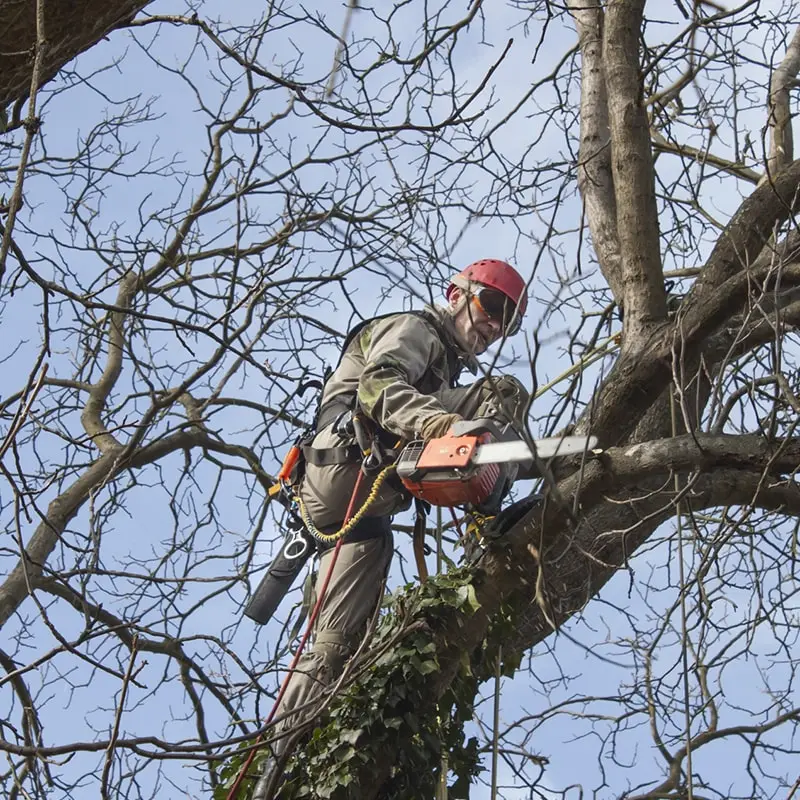
Look, we get it. Some guy with a pickup truck and a chainsaw gave you half the price. But here’s the rub: tree removal is, in fact, dangerous work. These are multi-ton trees; power lines and equipment that wouldn’t have looked out of place on the set of an action movie. The value of hiring a professional arborist in Gwinnett County:
- Appropriate licensing and insurance that doesn’t leave you holding the bag when something goes haywire (say, a tree coming down on your shed rather than the ground)
- Specialized machinery — bucket trucks, cranes and rigging systems that enable the work to be done faster, safer
- A physics and a tree biology lesson — yes, really — on predicting how a tree will fall, and what to do when things go sideways.
- An understanding of local tree species such as these stubborn Black Walnuts or towering Tulip Poplars that need to be handled a certain way.
And a professional crew knows there’s a difference between taking an 80-foot Sweetgum down next to your house and cutting firewood in the woods. They have the know-how to break it down section by section, for example. without transforming your landscaping into a scene out of “The Day After.”
The Free Estimate Advantage
The vast majority of reputable Gwinnett County tree services will provide a free estimate—and you should definitely get a few estimates. But the visits are not only about comparison shopping for price. A good arborist will:
- Walk over your property and evaluate the condition, size, and position of each tree
- Describe in English (rather than tree-surgeon) how it will be removed
- Help you navigate Gwinnett County’s permit requirements if your tree falls under local ordinances
- Provide a detailed written estimate breaking down labor, equipment, stump removal, and cleanup costs
Think of these consultations as free expert advice sessions where you’re also shopping for the best value.
What to Remember
Knowing the Tree Removal Cost Guide for Gwinnett County and what is included, will enable you to have the best possible experience without any misunderstanding during your next project. With details about size, species, location and season, you can be prepared in your tree removal discussion with professionals, rather than becoming the recipient of a shock price.
Safety should be your first priority. Those towering oaks and sweetgums might appear manageable from the ground, but removing them requires specialized training, insurance coverage that many homeowners don’t have and equipment lacking from most garages. If something goes wrong during a DIY tree removal, you can end up having to pay hundreds or even thousands of current dollars above what you would have paid in the first place by calling a professional.
If you decide to take the next leap:
- Obtain at least 3 written quotes from registered practitioners
- Ask about any location-specific permit requirements for your property
- Ask about the costs for stump removal and debris hauling ahead of time
- See if you qualify for multi-tree discounts
- Always check insurance and credentials before you sign on the dotted line
Be sure to budget for costs ranging from $200-$2,000 a tree depending on the variables noted above. Build in an extra pad for the unexpected, such as hidden decay or difficult access problems. You — and your wallet, and your peace of mind — are likely to thank yourself for doing the research before the chainsaws start roaring.
FAQs (Frequently Asked Questions)
What is the average price range for tree removal in Gwinnett County?
“Usually, it’s anywhere from $200 to $2,000 in Gwinnett County,” he said. The actual cost is based on numerous factors such as tree size, species, health and location.
How do the height and diameter of a tree impact cost in Gwinnett County for removal?
The cost of removing a tree is directly related to the size and are also driven by the complexity of removal, whether through clearance limitations or challenge in their final drop for instance trees near electrical lines, homes or properties filled with valuable assets. There are various height ranges from under 30 feet up to 80 feet and over that range into account increasing level of risk the higher you need a lift, or how much more involved the project will be.
Are tree removal costs more in an emergency circumstance or after storm damage in Gwinnett County?
Yes, emergency tree removals resulting from events such as storm damage or trees blocking roads may have higher costs. Again, it’s because of the urgency of needing the equipment in at night and having some really large, heavy pieces of equipment to take up with a truck and trailer.
Do I need a permit to cut down my tree in Gwinnett County?
Some tree cutting in Gwinnett can be subject to permit depending on local laws. Acquiring these permits may take longer and cost more in your project budget. It is recommended that local authorities or professional services be consulted to ensure proper adherence.
How does Gwinnett family weather impact timing and cost of tree removal services?
Gwinnett County has hot humid summers, from late May to mi-September. The wettest month is the summer, with average temps of 84 degrees and the wetest months of late-May through mid-August. The best time to remove a tree is months when there is less rainfall (Try October), this avoids delays and added risk from rain or storms, these things can effect safety and cost.
Does homeowner’s insurance pay for tree removal in Gwinnett County?
Homeowners insurance may cover part or all of the tree removal expenses if a healthy tree falls due to covered perils such as windstorms or lightning strikes. However, coverage varies by policy; it’s important to review your insurance terms or consult your provider regarding specific situations.