If you’ve driven through Georgia neighborhoods in late winter and seen crepe myrtles hacked down to leave stumps that resemble a multitude of knobby fists, reaching for the heavens — well, you’re witnessing crepe murder. This form of butcher pruning has become so widespread throughout the state that a lot of people think that is just how one manages these beautiful trees. Spoiler alert: it’s not.
There is more to it than making your crepe myrtles look pretty (though that’s a sweet fringe benefit) and our tree trimming services can show you the correct pruning methods. They are crucial for promoting tree health, encouraging those beautiful summer blooms we all know and love, and avoiding a slew of problems that can result when cutting is heavy-handed. When you commit crepe-murder butchery by trimming them the wrong way, you’re basically asking for weak growth, disease and a bucketful of regret.
This guide is to help Georgia gardeners appreciate climate-appropriate pruning techniques that are compatible with our hot humid summers and unpredictable winters. We explain how to keep your crepe myrtles Happy while still maintaining their natural beauty — no chainsaw massacre necessary. And if your tree is beyond all help, our tree removal services can help. And if you ever need to remove a section of your yard for new landscaping or some other reason, be sure to ask about our land clearing service . And if something unexpected occurs where your trees need emergency attention, remember that we are also here to assist with emergency tree removal
Understanding Crepe Murder: What It Is and Why It Happens
Picture this: You’re driving through your neighborhood, and you spy a crepe myrtle that appears as if someone went at it with a chainsaw and decided the work was good. Those fat nubby branches thrusting skyward like knobby fists? That’s crepe murder in action — the homicidal pruning that every year hacks these beautiful trees down to so many leafless stumps.
This savage mechanism sets off a cascade of problems:
- The tree compensates by sending out weak, spindly growth that cannot hold the weight of blooms.
- There will be fewer flowers (go figure, that’s what we like best about crepe myrtles).
- And those knobby knuckles are the perfect hiding places for pest and disease pathogens.
- The natural, graceful branching pattern? Gone, replaced by a misshapen clump of stems that resembles a bottle brush more than a tree.
So Why Do People Commit Crepe Murder?
So, why do people do this? Here are some common reasons:
- A lot of people think it needs the cut or that serious cutting causes more blooms.
- Others fret about regulating size, assuming that the only tool for making things different is to be drastic.
- Some just do what they see neighbors — or their own families — doing, propagating a rhythm of good-hearted yet dangerous care.
Understanding Georgia’s Weather: Why It Matters for Pruning Crepe Myrtles
In Snellville and the rest of Georgia, we have a bit of an issue with caring for crepe myrtles because our weather is so specific. With hot, humid summers and rainy winters that are short with cold temperatures, it’s vital for us to know how these trees experience the climate.
How Georgia’s Weather Affects Trees
The elements play a huge role in the health of our trees here in Georgia. Here are some important things to keep in mind:
- Fungi: The 89 degree humidity of summer will quickly spread one or more types of fungi to the point that our crepe myrtle are in bad shape.
- Pruning Wound Susceptibility: The wet season in Georgia is May through August, which is the time of year when recently pruned limbs are most susceptible to infection. Which also means that if we prune when our trees are dormant, they will be susceptible to disease pathogens.
- Frost Damage: Waiting until late can be dangerous; if winter temperatures drop below 35°F you risk exposing new cuts to frost.
By learning these climate effects on trees, we can make more informed decisions about when and how to prune our crepe myrtles.
How Snellville Weather Affects Pruning
The Snellville weather patterns are also a direct factor that will help in deciding on the best time for pruning:
- Humidity: From May 19 to September 30 we have a high humidity which can contribute to powdery mildew and other fungal diseases. This indicates that it might be risky to prune during this time of year, as any fungi already present may become more severe if the tree is wounded.
- How Much Rain: Snellville generally sees about 4.4 inches of rain in February. We need to schedule our pruning so that we don’t make it during rainy periods when the ground is too wet.
Determining the Best Time to Prune
So when is the best time to prune our crepe myrtles, then? Picture When to Prune In Georgia, the best time to prune is from late February (when you can be fairly certain winter’s frost threats are over) till mid-March (right before new growth starts). This window gives us time for the wounds to heal prior to hot and humid summer, without threatening with snow or freezing temperatures in January.
If we take into account broader climate conditions as well as local weather in Snellville, we’re able to maximize our time and prune at the right times so that our crepe myrtles will grow healthier!
When to Prune Crepe Myrtles in Georgia
The ideal time to trim crepe myrtle Georgia gardeners should note runs from mid-February until mid-March. This sweet spot comes right before those spring buds are busting open and allows your trees to start their growing cycle off with a clean slate.
Here is why it works so well.
- Sleeping tree bonus: Trees are still asleep, so they can’t bleed sap or freak out from cuts
- Frost protection: By the end of February, much of our risk from hard freezes (those meanies that drop below 23°F) has passed.
- Growth prep: Pruning right before spring awakening directs the tree’s energy to create strong, healthful new shoots as opposed to weak, scrawny growth
Avoid those rainy days when picking a day to prune. Georgia’s wet season generally starts around May, but those moisture-drenched February and March days are still excellent for letting fungal spores run amok. Choose a dry, sunny morning when your tools can make clean cuts (and diseases cannot hitchhike from branch to branch). Your crepe myrtles will reward your wise timing with a display of blooms in the summer instead of being just another victim of bad timing.
Proper Pruning Techniques for Healthy Crepe Myrtles
Natural Form Pruning
Natural form pruning honors the graceful framework crepe myrtles create spontaneously. Consider these trees as nature’s sculptures — they spontaneously take on beautiful vase forms with trunks forking upwards and out. You can’t reinvent them; you can only make them better.
Thinning Branches Technique
The thinning branches method is analogous to editing a cluttered photo — you’re cutting out what jumbles the composition. Target branches that:
- Grow inward toward the center
- The act of rubbing and crossing each other
- The clustering of tightly packed nodes obstructs the air’s path.
- Compete for the same space
This selective method permits sunlight to penetrate the interior branches and for Georgia’s humid air to circulate through the canopy, which limits moisture accumulation that fungi positively adore.
Removing Diseased Limbs
Diseased branches must be removed with a discerning eye. Cut away anything that’s:
- Dead or dead and dying (brittle, discolored bark)
- Exhibiting symptoms of disease (sores, abnormal growths)
- Damaged from storms or breakage
- Rubbing wounds into neighboring branches
Make cuts just outside the branch collar — that subtle swelling where a branch meets the trunk — to encourage good healing.
Tools and Sanitation Practices for Effective Pruning
It’s all in the tools, friends: The right ones mean everything from a smooth trim to a bloody disaster. Bypass pruners allow you to cut up to ¾” diameter with a clean, scissor-like action. For medium-sized limbs, from ¾ inch to 1½ inches, loppers offer the extra leverage you need without making it a punishing day for your arms. Anything bigger and you need a pruning saw with a curved blade that cuts on the pull stroke.
Here’s where a lot of people slip up: The disinfection of your pruning tools is not an optional thing in humid Georgia. Clean your blades between cuts with a wipe of rubbing alcohol or a 10% bleach solution, particularly when you are dealing with diseased wood. All of those fungal spores hitching a ride on dirty tools will gleefully infect your next cut.
Maintain sharp tools — dull blades crush stems rather than cutting cleanly, creating ragged wounds that can lead to pests and disease. A quick pass with a sharpening stone after every few uses helps keep your garden shear and lopper performance like new. Occasionally oil the pivot points so they don’t rust in our damp, Georgia air.
Avoiding Common Pruning Mistakes That Lead to Crepe Murder
The most damaging mistake you can make with your crepe myrtle is topping. When you lop great limbs, the tree fills the void by throwing out suckers — loads of spindly, spurted limbs from cutting points. These new shoots expand quickly but are weak-kneed — they’re basically tree centers for a crash diet. In summer storms or ice events (yes, there’s such a thing in Georgia), these brittle branches snap off like breadsticks.
Over-pruning implications more than just poor growth. Your crepe myrtle is a new wood bloomer, meaning that it blooms on the growth produced this year from last year’s wood. Cut away too much of that framework, and it’s like telling your tree: “We’re sorry, there is no flower show this year!” You will have fewer blooms, smaller flower clusters and a less impressive show.
The hot, sticky Georgia weather is like a paradise to pests infestations resulting from bad pruning. Every time you make a ragged tear, flush cut against the trunk or leave a stub behind, you create an open door for aphids, scales and fungal diseases. In the humid summer-time, it’s difficult to get these inside-the-tree wounds healed over properly so that the tree can keep pathogens out of this damaged tissue.
Benefits of Proper Pruning on Crepe Myrtle Health and Appearance
Prune your crepe myrtles properly and you’re not just preventing damage, you’re actually augmenting their health and beauty.
Mildew prevention
Trimming properly to open the canopy is instrumental in preventing mildew on crepe myrtles. By improving airflow between branches, there’s less chance that moisture will cling to leaves long enough for powdery mildew and fungal infections (which tend to flourish in Georgia’s humid summers) to gain a foothold. It’s like leaving your tree room to breathe instead of smothering in a dense tangle of branches.
Aesthetic tree shaping
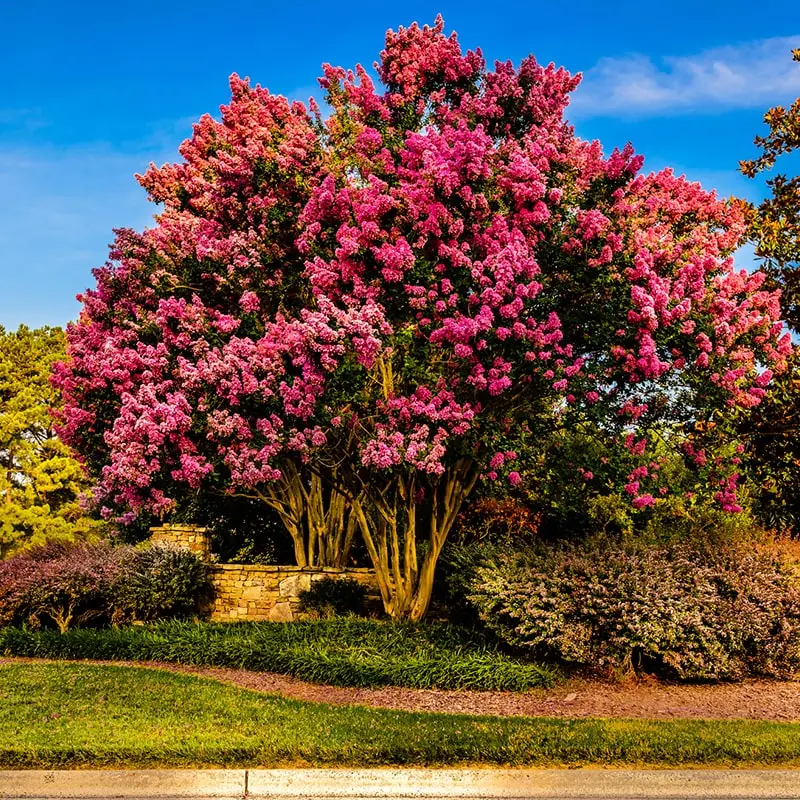
The advantages of training the tree for appearance are obvious. Properly pruned, a crepe myrtle is on full display for its lovely natural vase form with graceful weeping branches that provide interest in all seasons. Bone-smooth, exfoliating bark patterns are part of the show instead of hidden under knobby stumps and puny sprouts.
Improved bloom quality
When you respect the way that a tree develops, you will notice better flowers as result. Crepe myrtles bloom on new wood that grows from the past season’s growth, so selective pruning — rather than whittling them down to a stump — results in stronger branches that produce more massive flower clusters of those various shades of pink, purple, red and white blossoms.
Post-Pruning Care to Support Tree Recovery and Growth
Your crepe myrtle has just had a summertime haircut — what now? Consider post-pruning care akin to aftercare for any treatment. Your tree requires some tender loving care to spring back up.
Water Wisely
Water wisely during those three weeks, particularly if Georgia opts for the dry land shuffle. Newly pruned trees will dry up more quickly through fresh cuts, so deep watering once or twice a week is better than daily sprinkles. Investigate soil moisture 4 inches deep – if it’s dry, bring out the hose.
Feed Strategically
Feed thoughtfully with a balanced fertilizer (something along the lines of 10-10-10) in early spring after pruning. Pass up the nitrogen-heavy stuff that will give you a leafy monster with fewer blooms. Apply around the drip line, as directed on the package, not right against the trunk.
Keep Your Eyes Peeled
Keep an eye out for trouble signs: wilted leaves, oozing wounds or odd discoloration. Humid Snellville Condensation from the humidity in Snellville can break up even the best of pool parties. Catching issues early, within days not weeks, is the difference between a “quick fix and fighting this thing for months. Climb the tree weekly during that first month post-pruning, and add training cuts monthly through the growing season.
If you are feeling overwhelmed or unconfident about taking care of the tree yourself, by all means, call in some professionals. Tree Time provides professional tree services in Loganville, GA and we can help with everything from trimming to disease control.
Selecting the Right Crepe Myrtle Varieties to Minimize Pruning Needs
The surest way to escape crepe murder is sometimes to choose the correct tree from the beginning. Dwarf and semi-dwarf crepe myrtles are new landscape game-changers in Georgia, as urban landscapes with less space to use.
Consider these low-maintenance champions:
- Pocomoke– A real dwarf to 3-5 ft, fantastic for underplanting around foundation planting
- ‘Chickasaw’ – Semi-dwarf form reaching about 6-8’ with beautiful pink flowers
- ‘Delta Moonlight’ - Compact at 8-10 feet, cream white flowers don’t overpower smaller yards.
- ‘Tonto’– A compact grower which will not exceed 10 feet, with bright fuchsia colored flowers
When you size your trees to the garden, it allows you to work with the plant’s natural growth tendencies instead of constantly trying to argue against them. A ‘Natchez’ can grow to 30 feet in height — beautiful when it has room to spread out in a large yard, but a pruning headache pushed between one and a driveway. Pick a variety that inherently suits the scale of your space, and you’ll spend your weekends screening flossy pines instead of murdering them with loppers.
What to Remember
Cutting down your crepe myrtles is a fate worse than death. Here is a look at sustainable crepe myrtle care Georgia can be proud of and it begins with understanding how these gorgeous trees are designed. Timing (late winter to early spring), tools and a caring touch will help ensure those stunning summer blooms without the hack-job fear.
Halting crepe murder is not just a question of appearance — it’s a matter of tree health, disease resistance and preserving the landscape beauty in our Georgia landscapes. Those graceful vase forms and smooth, peeling bark are what distinguishes crepe myrtles. Let’s keep them that way. Your neighbors (and trees) will thank you.
FAQs (Frequently Asked Questions)
What on earth is ‘crepe murder’ — and why is it harmful to my crepe myrtles in Georgia?
To everyone here, crepe murder is the wrong and violent trimming of crepe myrtles that leaves them maimed up and a hunchback wretch of their true potential in bloom. This is detrimental to the tree causing poor development, less flowers, susceptibility to bugs and diminishes from it’s beauty.
When is the best time to trim crepe myrtles in Georgia so they will grow and bloom properly?
The best time to prune a crepe myrtle in Georgia is late winter through early spring, which translates into mid-February through mid-March. Pruning now removes the number one tree killer, dead wood and prepares your trees to grow vigoroursly in spring.
How should crepe myrtles be pruned to stay healthy and looking good?
Corrective pruning should include efforts to preserve the open vase form of crepe myrtles by removing crowded and inward growing branches to enhance air flow and light exposure. Only necessary branches like damaged, diseased or dead wood or crossing limbs shall be removed and not topped or aggressively cut.
What does the GA climate do to a crepe myrtle when it comes to pruning?
Georgia’s hot, muggy summers and brief cold, wet winters have an effect on disease risk and growth cycles in crepe myrtles. Pruning should be conducted to avoid the high humidity that can lead to fungus, and take place at a specific time to prevent frost damage, this maximizes tree health in local climate.
What tools and sanitzation are suggested for proper and clean pruning?
Y ou’ll need bypass pruners (for small branches), loppers (for medium limbs) and saws (if you’re cutting anything bigger than an inch thick). Tools should be cleansed and provide dip each time a cut is made to minimize the spread of fungal spores or bacteria. The instruments must be properly maintained to avoid ragged edges not only during cutting but also at the site of healing.
How can I plant the right types of crepes myrtle to reduce heavy pruning in Georgia landscapes?
Opting for dwarf or semi-dwarf crepe myrtle varieties, which are appropriate for tight spaces, reduces the need of heavy corrective pruning. Choosing the proper cultivar size for your landscape conditions will help maintain a natural and vigorous beauty with minimal maintenance.