And then there’s that neighbor down the street who thought it was a good idea to give their pretty oak tree a “haircut” by cutting off its entire top. Yep, that’s tree topping and it’s kind of like getting a buzz cut from someone who’s never used clippers before — except it’s way more painful for the trees.
Here’s the thing: A lot of people seem to think they’re doing their trees a favor by trimming them down to size. “It’s getting too tall!” or “I’m concerned about wind damage!” they say. The reality? Tree topping is one of the worst things you can do to a tree, behind ignoring its existence all together.
You can think of appropriate pruning as a thoughtful hair cut for your tree that works with its natural growth shape instead of against it. It is the difference between a good haircut and a hack job— one allows trees to grow healthy, while the other leaves your tree fighting for its life.
In some cases, when a tree has been too harmed and/or diseased through improper pruning processes (e.g the discredited topping), emergency tree removal may need to be performed.
If you’re one of the millions of people tempted to save a buck by going insane with those shears, this guide is for you — we’ll get under the hood and break down just why this slashing mayhem is so bad for your trees (hint: it ain’t pretty), but more importantly how to properly prune like a pro for long-term health and beauty. Whether you have one that’s a mere sapling or an old giant in your Snellville yard, knowing these principles will save you money, headaches and maybe even the life of your tree.
Understanding Tree Topping and Its Effects
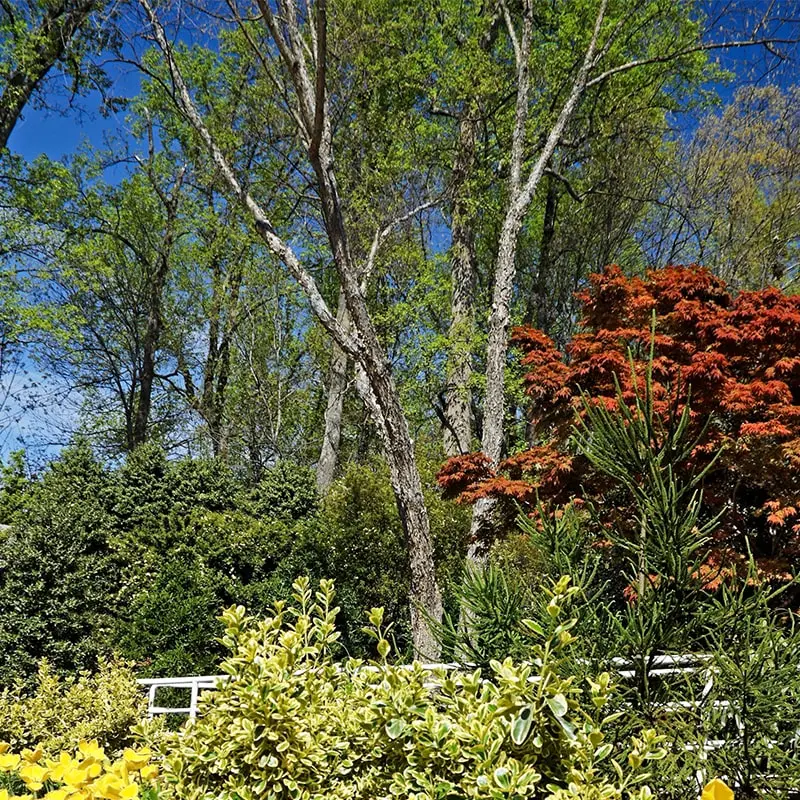
What does tree topping mean _Tree topping definition is known by several names in the arboriculture industry: hat-racking, heading, lopping or sometimes simply “butchering” (alright, so maybe that last one’s not official but it’s accurate). Vision someone grabbing a chainsaw and hacking off an entire upper section of a tree or removing large branches with no thought about where they are landing. That’s topping in simple terms.
The practice treats trees like big hedges, cutting branches back to stubs or small branches not large enough to become the terminal. Someone could behead a 40-foot Sweetgum to 20, and leave behind those coat racks pointing skyward. The impact of topping begins right away, and extends from there.
Here’s why this is such a bad way to operate:
- Disregards nature: Trees have developed for millions of years certain ways of growing. Topping tosses that formula out the window
- Produces large wounds: Those big flat cuts create a lot of surface area between the inner portion of the wood and lacerated tissue.
- Capacity of the immune system is overwhelmed: Topped branches are larger, 4” – 8” or greater in diameter that smaller pruning cuts and the tree can’t seal (compartmentalize) around this large wound.
The trees can’t scar over wounds the way our skin scars. They wall off damage by forming barriers around injured tissue. “When you have wounds the size of dinner plates and larger, that defense system just can’t handle it,” Reuleaux said, leaving a tree vulnerable to rot, disease and structural collapse.
In the case of these behaviors, professional help may be warranted. Hiring a service such as tree trimming can ensure the size and shape of your trees remains under control without having to resort to harmful practices like topping. If a tree been topped and is un-restorable, tree removal may be the only recourse. And for lots that will entail significant renovation or clearing, you can opt to utilize a land clearing service.
If you need to hire a professional to take care of these services in Loganville GA, Tree Time has been handling tree removal in all sizes and varieties for over 20 years, and we can offer the same professional and safe treatment when dealing with any of your tree related needs.
The Dangers of Topping Trees
Consider your tree’s leaves to be little solar panels that are in overdrive to keep the whole operation going. When you chop the top off a tree, you’re basically closing the power plant. Tree health risks grow rapidly, because photosynthesis — the miraculous process by which leaves turn sunlight into energy — is vastly reduced. A tree that is suddenly without 50-100% of the leaves growing on its crown can no longer produce enough food to sustain itself. It’s as if I were asking someone to run a marathon on an empty stomach.
The rattled trees are easy pickings for all kinds of trouble. Those massive wounds from topping? They are open invitations for decay fungi, bacteria and opportunistic pests to come on in. Unlike smaller pruning cuts, which trees can more easily compartmentalize and seal over, topped trees struggle to close such gaping wounds. The bare wood begins to rot, from the inside out.
This is where things start to get really dodgy when it comes to susceptibility or resistance to disease: A stressed tree can’t put up much of a fight. In Snellville’s humid summers (those no-escape muggy ones with 71-degree overnight lows, remember?), fungal diseases are to be passed around like gossip at a backyard barbecue. Swarming insects such as borers and beetles are drawn to the trees’ distress signals — yes, they literally can smell the chemical signals of tree distress. Throw in the environmental stress of our 35-degree-winter/89-degree-summer temperature swings and you have a recipe for tree disaster.
Water Sprouts: A Drawback of Topping Trees
Imagine this: you have put the angel on top of your tree, thought you had worked out how to solve “too tall,” and …. A few weeks later, your tree resembles a year-end starling and has acted like it stuck its branches into an electrical socket. Those crazy, untamed shoots that come up all over the place? Those are water sprouts, and they’re basically your tree’s panic response to trauma.
Cut the top off of a tree, and it goes into survival mode. The tree is in a panic trying to replace all those lost leaves (it needs them for food production), so it sends up dozens of these fast-growing shoots from the severed wounds. Think of them as the plant equivalent of stress eating — fast, panicky and not particularly healthy.
Here is the kicker with water sprouts:
- Weak attachments – Grow from buds left behind by dormant bark instead of typical branch collars and are hardly glued on.
- Brittle structure – They grow so fast that wood fibers don’t become strong.
- There is the constant maintenance nightmare – I have to prune mine multiple times throughout the year since they grow like weeds in steroids.
- Safety risks – They can snap and come down to the ground during strong winds, damaging property or cause injury to people below.
The irony? You had the top chopped off the tree to save work, but now it’s more work. Those water sprouts can shoot up several feet in a single season, and because they are so weakly attached, break off in moderate winds — sometimes carrying chunks of the already-damaged trunk with them.
Long-Term Costs of Topping Trees
That tree is doomed and your wallet will not thank you for topping it. Although the initial hacks may seem less expensive than proper pruning, other costs incurred from topped trees grow faster than water sprouts.
You know those fragile shoots we were just gabbing about? They must be pruned every year or two, just to stay ahead. That’s your annual maintenance invoices as opposed to every 3-5 years in the recent stories of properly pruned trees. Do the math — you’re paying two or three times as much over 10 years in most cases.
The true financial gut-punch occurs when a structural fracture occurs. Topped trees turn into hazards, their brittle branches weakened by storms (and Snellville is no stranger to heavy summer thunderstorms). When a big limb falls through your roof or on your car, you’re seeing:
- Storm Cleanup 24 hour service (This includes some tree services as well with exorbitantly high prices, sometimes double or triple the normal rate)
- Property damage repairs
- Also, possible liability if it damages a neighbor’s property
- When the damage was too significant – I had them removed completely.
Many topped trees deteriorate so severely they need removal within 5-10 years anyway, which is to say that you wind up paying for topping, repeated maintenance and ultimate replacement. That’s three costs where one could have been used to prune from the start.
The Role of Local Climate in Tree Care
Your trees do not exist in a vacuum — they are in constant communication with the local effects of climate on the trees around them. Our weather here in Snellville does a few things that keep our leafy friends on their toes, and understanding those patterns means you can make smarter decisions about pruning.
Understanding Snellville Weather Effects
Snellville weather effects manifest in some interesting ways over the year:
- We range from a crisp 35°F in the winter to a sizzling 89°F in the summer.
- Hot and muggy summer months (May through September) are hard on trees while they are already weak, making them susceptible to diseases and pests.
- An apex tree starved for space to photosynthesize? It’s going to get even worse when July hits nearly 14 rainy days and high humidity.
Timing Your Pruning
The timing of your pruning in relationship to these cycles is important more than you might realize:
- And the drier months, roughly August through May, bring better conditions for pruning work — fewer wet days to let wounds callus over without being confronted with constant moisture say “come in and infect me.”
- That other, cloudier time you barely remember between November and June? It actually does provide some respite for trees healing from correct pruning, and can limit sun shock on fresh cuts.
Considering Winter Dormancy
The 4.4 inches of rain we “enjoy” in February, together with occasional snow in January, add another consideration: winter dormancy is your friend for major pruning work because that’s when plants are resting and least stressed; but you also don’t want to chance those very occasional ice storms or cold snaps when branches may already be strained from lack of water.
Proper Pruning Techniques for Healthy Growth
If the crown of your tree is too big, then you’ll want to resize it using crown reduction pruning. Rather than shearing it drastically, such as with a buzz cut, the idea is to selectively remove some of the biggest branches back to smaller lateral branches. This will allow your tree to retain it’s natural shape, while making it more manageable. The canopy will maintain the balance between its total weight and the strength of structure, and there won’t be any stress on the tree from large cuts.
Understanding Branch Collar Cuts
So the secret to proper pruning is learning how to make branch collar cuts. This is the site of attachment of a branch to its stem or another branch (to which it may be attached at an angle). Rather than simply an interesting fact about trees, you should be making your cuts here. Special cells in this collar serve as the tree’s own healing mechanism.
Making the Right Cuts
When making cuts be sure to line your saw just outside of this collar and on an angle, just a hair. And if you snip too close, you’ll be destroying those cells that are healing.” Go too far the other way and you’ll leave a stub that can invite decay or disease. A well-placed cut enables the tree to quickly compartmentalize and close over the wound, which means no insects or disease organisms can enter.
Then, tree will demonstrate its gratitude by growing healthy callus tissue over a period of time that eventually covers over where you cut it.
Pruning at Different Tree Life Stages: Developing Strong Structure
Trees require different levels of care based on their age, in much the same way you’d give your teenager advice other than what you’d give grandpa. Benefits of Pruning Young Tree will start benefiting from being pruned since the time you plant that sapling in your yard.
Young Trees (0-5 years)
When trees are young — call it the first three to five years — you’re setting them up (or not) for success. Strategic pruning during this phase:
- Forms a strong central leader, that awkward many-trunked look that we see in other trees really is just the sign of a tree who doesn’t know what it wants to be when it grows up.
- Eliminates rival branches before they develop structural problems
- Provides excellent separation of main scaffold limbs (try for 18-24 inches vertical height)
- Re-aligns crossing or rubbing branches that soon will wound each other
Consider it the all-too-early lesson in good posture — much easier than having to correct a hunched back later.
Mature Trees (5+ years)
Mature tree care is a lighter touch and a bit more of conservative approach. No need for drastic action on these established beauties — that towering Sweetgum shading the driveway for decades, say. You should be maintaining:
- Pruning out dead, dying or diseased wood (the “three d’s” of tree care)
- Crown thinning for air movement and wind resistance
- Tackling dangerous limbs before they become insurance claims
- Respectful of the tree’s natural form, rather than forcing a style upon it
Temperature Swings Matter Snellville’s wild temperature swings between 35°F and 89°F says timing is everything – prune during dormancy (late winter) to lessen the risk of infection and spreading.
Restoration Strategies for Previously Topped Trees
So you’ve ended up with a topped tree, or are the culprit yourself — take a deep breath and don’t panic just yet. And while these butchered beauties are facing an uphill climb, restoration pruning provides a means of recovery — even if the trees will never quite be the lookers they once were.
Topped trees create their own set of headaches:
- Slender water shoots form a disorganized crown that appears to be bad hair day gone worse.
- That makes the tree structurally unsound, with limbs liable to snap off in stormy weather.
- Results: It reeks (pun intended) of “NO ONE LOVES ME” more than it does of “magnificent landscape feature.”
- The scars from topping never really heal, and die together in some kind of bars where water collects and rot sets in.
For the experts of arboriculture, restoration is a multi-year investment, not just an attempt at instant gratification:
- Thinning Selective thinning: The purpose of this is to remove the weakest water sprouts and leave those shoots in a better position with potential to become a proper branch.
- Strategic pruning: redirect vigorous growth around more stable frame; grow slowly to rebuild functional crown (from UMN).
- Patience-for-it scheduling: stretches the job over 3-5 years, so that you only take away up to a quarter of all new growth in any given season and don’t freak out an already stressed tree.
Here is the reality check: A topped tree will always bear scars. The original branching structure is history and the colossal pruning wounds are weak spots. Think of restoration pruning as damage control, not a cure — you’re helping the tree salvage what it can from a bad situation and making future hazardous situations less likely.
Promoting Healthy Trees Through Correct Pruning Practices
Your trees are too good for a chainsaw massacre. Whatever you do, avoid tree topping like the plague—it’s the arboreal version of a bad haircut that never grows back quite right.
When you’re ready to encourage healthy growth, it’s time for the pros. Arborist know tree biology like a doctor knows anatomy. They will evaluate your individual tree (whether it’s that beautiful Sweetgum or even taller Tulip Poplar in your Snellville) and set up a plan where the pruning supports — not fights against — its natural form.
Imagine professional pruning as preventive medicine. Admittedly, it costs money up front, but that’s pocket change next to emergency tree removal after a storm blows down those weakly-attached water sprouts. Bonus: Correctly pruned trees offer major curb appeal and property value.
The Right Way to Prune for Healthy Growth : This isn’t just a catchy phrase—it’s your roadmap to having beautiful, structurally sound trees today and 50 years from now that’ll shade your grandkids. Your trees are relying on you to make the right call.
FAQs (Frequently Asked Questions)
What is tree topping and why is it bad for trees?
Tree topping, also known as hat-racking or heading, is an act of cutting off major branches from the top or whole tops indiscriminately. This results in the healthy structure and health of the tree being ignored, more significant injuries formed that cannot compartmentalize well, and ultimately susceptibility to disease and insects.
What is the effect of topping a tree on its general health and growth?
Topping takes away most of the leaves, slowing photosynthesis and lowering the tree’s energy production. This weakened condition leads to a susceptibility to diseases, pests and environmental stresses that can harm the tree’s health and shorten its life.
What are water sprouts and why do they grow when you top a tree?
Weak, brittle shoots that sprout up quickly after a tree has been topped. They develop through the practice of very hard pruning, but are prone to structural weakness and repeated regular maintenance pruning.
What negative long-term financial consequences does tree topping have?
Top-out trees often need more maintenance because the structure is reduced and vulnerable. Eventually this results in more expense with regular pruning or even tree removal if the damage is extensive.
What affect does the local climate have on tree care and pruning?
Climate Tree Health Environmental factors including temperature ( ranging from. 35 – 89.2°F ), humidity, and specific seasonal rainfall conditions influence tree health and dictate the proper time for pruning. In places like Snellville, comprehending these conditions is beneficial in providing the right kind of care to ensure healthy trees.
What are the proper ways for pruning to grow healthy trees when you can’t top them?
Crown reduction pruning is advised as it reduces size while preserving natural shape and structural integrity. Making cuts just outside the branch collar allows effective wound closure and prevents decay. Early pruning in young trees encourages strong branch structure, while careful maintenance supports mature trees’ health and aesthetics.